
Sri Lanka Research to Map Single-Use Plastic Use in Food Sector
Sri Lanka is stepping up efforts to tackle plastic waste in the food sector, with new research set to examine how single-use plastics move through food and beverage value chains and where they can be reduced.
Through the European Union-funded CIRCULAR project, three university-led research teams will receive a total of €110,000 in grants to study single-use plastic (SUP) use and its environmental and public health impacts in the Colombo and Galle districts.
Researchers from the University of Ruhuna and the University of Kelaniya will examine plastic use across selected food and beverage value chains, including how plastics are used, transported, consumed and disposed of.
The studies will combine waste-flow mapping, data collection, environmental and public health assessments and life-cycle approaches to identify opportunities to reduce plastic use, promote sustainable alternatives and improve waste management.
The research aims to address a major information gap in Sri Lanka, where existing data often does not provide enough detail on the sectors, sources and types of single-use plastics entering the waste stream. Better data could help policymakers and businesses identify where interventions would have the greatest impact.
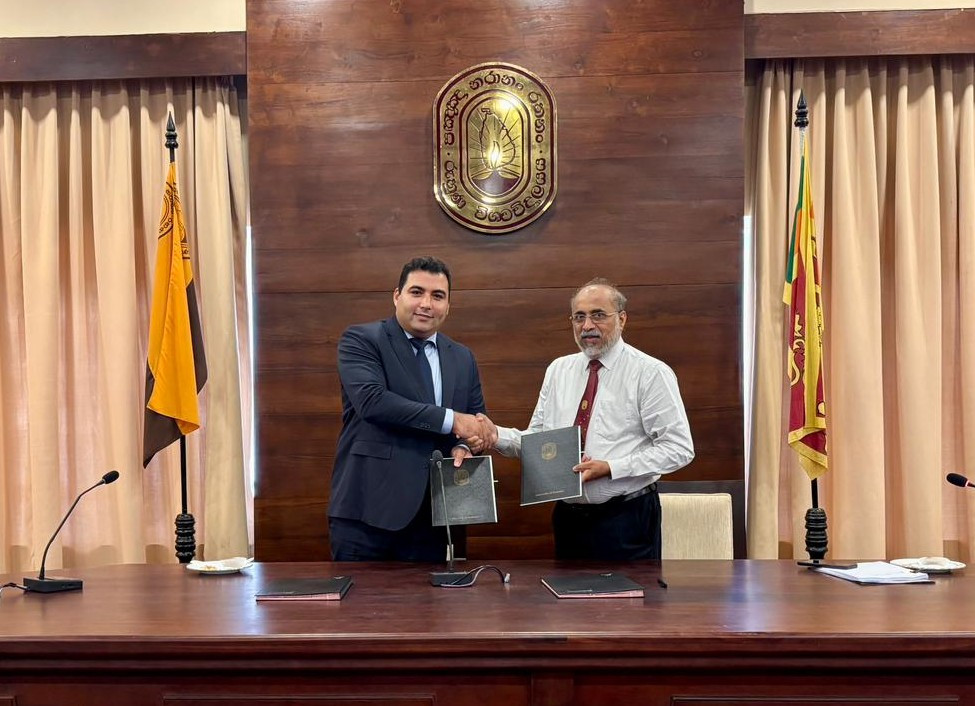
“Through our research grant programme, we aim to generate evidence that can contribute to better policy, planning and decision-making, while also strengthening collaboration between researchers, policymakers and practitioners,” said Mahmoud Gaballah, CIRCULAR Project Manager at Expertise France, at the grant signing ceremony at the University of Ruhuna.
The initiative forms part of Sri Lanka’s broader green transition towards more sustainable production and consumption. The CIRCULAR project also focuses on reducing food loss and food waste and encouraging a shift away from the traditional “take, make and dispose” model towards a more circular economy.
The three-year CIRCULAR project is funded by the European Union and partially co-funded by the German Federal Ministry for Economic Cooperation and Development (BMZ). It is jointly implemented by Expertise France, the Food and Agriculture Organization of the United Nations (FAO) and GIZ.
The research findings are expected to provide policymakers, businesses and other stakeholders with evidence to support more targeted action on plastic reduction, sustainable packaging and resource efficiency in Sri Lanka’s food sector.